Building Facts (back)
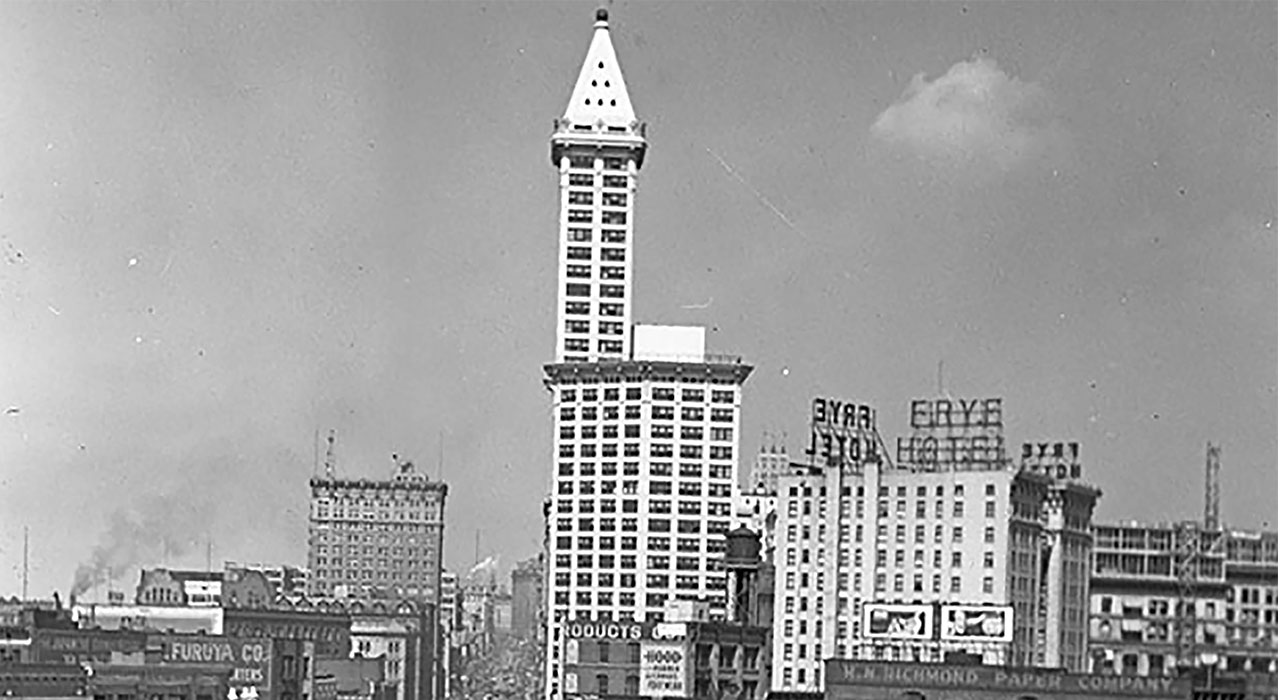
- The Smith Tower opened on July 4, 1914. At the time, it was the fourth tallest building in the world and weighed 48,650 tons. It remained the tallest building west of the Mississippi River for almost 50 years.
- Original period of construction: 1910 to July 4, 1914.
- Height: 42 floors. (522 feet from curbside to the top of the tower finial.)
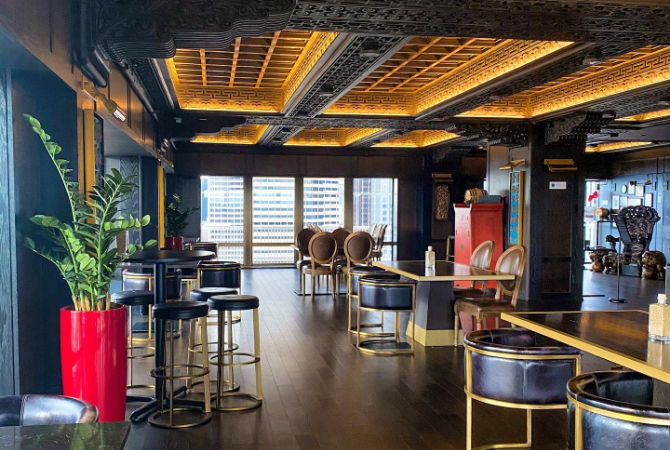
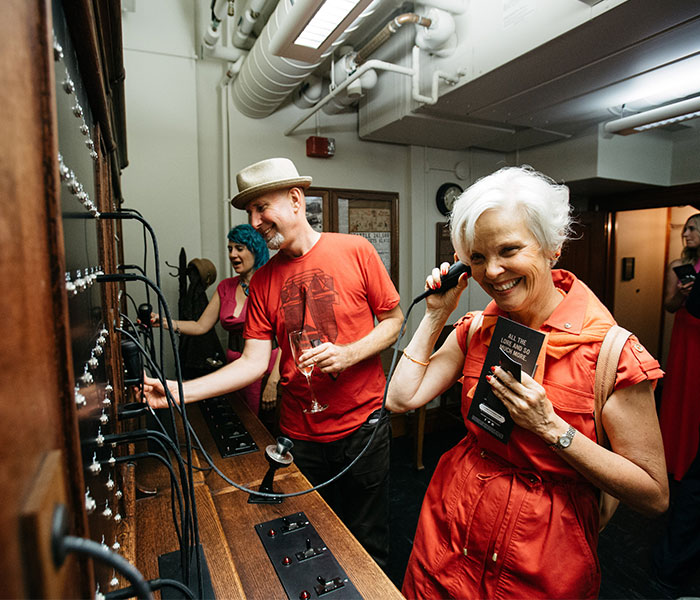
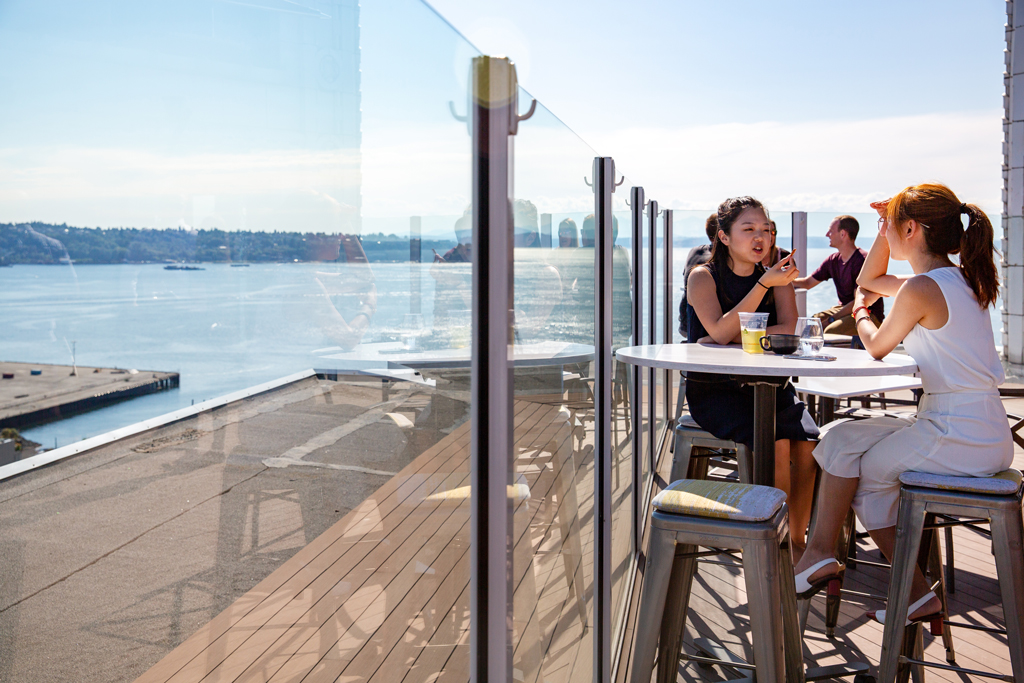
- Original square footage: 250,000 square feet of floor space occupying 12,160 square feet of ground space. Originally configured as 540 offices, 6 retail stores, two telegraph offices, a public telephone station, one Chinese Room, and an Observation Deck.
- Construction materials:
- •1,500,000 feet of lumber (Washington fir), provided by Seattle Saw Mill Co.
- •Steel frame: The E.E. Davis Company of Seattle erected the steel frame of the building using 7,970,000 pounds of steel and three construction derricks. The building contains 50 main support columns, the largest of which is 29’ 6” long and weighs 13 tons.
- •The structural steel was fabricated by the American Bridge Company at a plant in Pittsburgh, Pennsylvania and shipped to Seattle in 164 railroad cars, each with an average load of 28 tons.
- •Page-McKenney Co. of Seattle provided the 150,000 pounds of electrical wiring and conduit. If placed end to end the wiring is 75 miles in length. 1 train car was required to ship the wire; 3 cars for the conduit.
- •Outer skin of the building: Washington granite on the first and second floors, white terra cotta on the remaining floors. The terra cotta skin has been professionally cleaned only once - in the 1970’s - with a detergent cleanser. Seattle rain takes care of the rest.
- •Interior walls: Constructed of 12” X 12” X 4” brick, covered with two inches of plaster on both sides. All hallways, bathrooms, and public corridors are finished with a wainscot of Alaskan marble.
- •Elevators were provided by the Otis Elevator Company of New York. 6 of the 7 elevators remaining in the building are still powered by their original DC motors.
- •The building’s 2,314 windows are encased in bronze frames. Most contain their original 1914 safety glass. Unlike modern skyscrapers, Smith Tower windows can be opened and closed.
- Cost of original construction: $1,500,000.00. ($1.5 million)
- Original amenities:
- •1,432 doors, 2,314 windows, 800 borrowed light openings (interior hallway windows which allowed light from outer-wall windows to continue inward toward the inner core of the building).
- •Each office contained two telephone outlets, two telegraph outlets (which ran directly to the telegraph company’s distributing center), and 660 watts of electricity. Each office was also provided with its own vacuum cleaner.
- Foundation: The 120’ X 108’ lot that the Smith Tower occupies was excavated to a depth of 22 feet. 1,281 concrete pilings were then sunk an additional 22 feet until they reached a layer of hard clay. A grillage of iron and concrete beams was then placed horizontally atop the concrete pilings. This grillage, which weighed 1,162,800 pounds, in turn supported massive metal plates upon which the load bearing columns of the building were placed. The net effect is to spread the weight of the building over the entire lot.
- Fireproofing: All structural steel was coated with 2” of concrete. All hallways, corridors and common areas finished with sheets of Alaskan marble or Mexican Onyx (lobby floor). Office doors, window trim, chair and picture rails were manufactured from steel but painted to look like wood. The intent was to “totally eliminate[ ] the possibility of fire spreading by the simple method of starvation.”
- Thickness of floors: 4” gravel concrete slabs, topped with 2” of cinder fill (where the original electrical conduits were buried), and finished with 1-1/2” of either hardwood (offices) or terrazzo (corridors and common areas).
- Earthquake history: The Smith Tower has survived three earthquakes of a magnitude of 6.0 or greater: 2001, 1965, and 1949. The ground under the Smith Tower was never part of the tidal mud flats that underlie much of Pioneer Square. Core samples down to 122 feet below 2nd Avenue reveal fallen trees, some as large as 3 feet in diameter, which have never been exposed to seawater.
- Current owner: The Samis Foundation purchased the Smith Tower in 1996 at a foreclosure auction. The Foundation was created by the late Sam Israel to benefit Jewish education and wildlife preservation. Samis owns 14 other properties in Pioneer Square.
- 1999 Remodel: After receiving approvals from the state of Washington, the Pioneer Square Preservation Board, and the Seattle Landmarks Preservation Board, a $28 million renovation and rewiring project was begun. New to the building are forced-air heat (no more radiators!), air conditioning, and a fiber optic telecommunications system that runs through a now closed elevator shaft. A light well (the open space between the ‘legs’ of the K shaped building) was filled in to add 16,000 square feet of floor space. An interior fire escape was added to replace an aging wrought iron fire escape that clung tenaciously to the outer wall of the first 21 floors of the building. Electrical and security systems were also updated.
- Penthouse: The 37th floor originally contained a caretaker’s apartment. Above was a multi-story, 10,000-gallon, cast iron water tank. The water tank was disassembled by welders who cut it into pieces small enough to fit into the elevator. Then the entire space was remade into a penthouse apartment. It is the only residence in the building and contains a massive Dale Chihuly chandelier.
(back)
|
Home | Rates | Photos
| Caterers Observation
Deck | Smith Tower | Directions
| FAQ
For more information contact us at:information@chineseroom.com
Copyright
(c) 1999-2004, The Chinese Room at Smith Tower. All Rights Reserved.
|